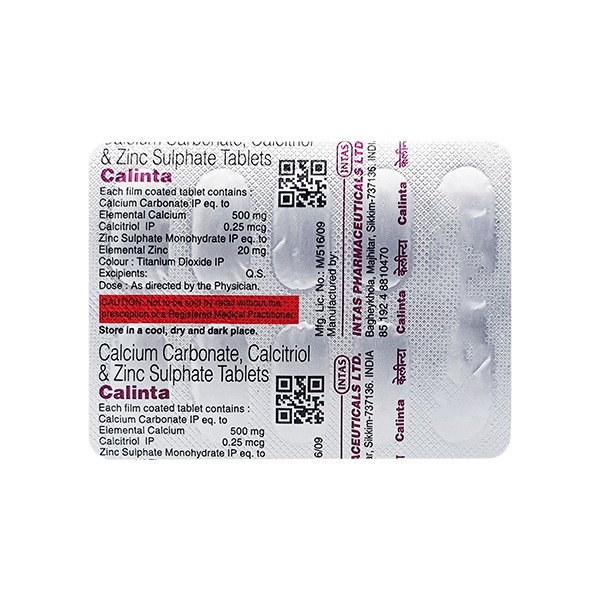
Manufactured By INTAS INDIA-1226
Calinta Tablet is used to treat low blood calcium levels (hypocalcaemia) in patients undergoing dialysis for chronic renal failure. Calinta Tablet effectively treats various conditions caused by low calcium levels in the body, such as osteoporosis (weak and brittle bones), osteomalacia/rickets (weak bones), and hypoparathyroidism (low levels of parathyroid hormone). Calinta Tablet is also indicated in the treatment of psoriasis (a skin disease that causes itchy scaly patches), hypocalcaemia (low calcium levels in the blood) and hypomagnesaemia (low levels of magnesium in the blood) after small bowel resection. Calinta Tablet can also be given to pregnant, nursing, and postmenopausal women to get enough calcium. Additionally, Calinta Tablet is used to treat hyperparathyroidism (overactive parathyroid glands) and metabolic bone disease in people with chronic kidney disease, surgery, or other conditions.
Calinta Tablet consists of three medicines: Calcium (mineral), Calcitriol (Vitamin D3), and Zinc sulfate (mineral). Calcium is a mineral that is used to prevent or treat a calcium deficiency. It provides essential nutrients to maintain bone formation and maintenance. Calcitriol is a synthetic version of Vitamin D3 and treats calcium deficiency with hypoparathyroidism (the parathyroid gland's decreased activity) and metabolic bone diseases in people with chronic kidney failure. It raises Vitamin D levels and thereby increases calcium levels in the blood. This helps in improving the absorption rate of calcium from the intestine. Zinc sulfate is a mineral that has an essential role in bone health. Zinc helps to stimulate osteoblastic bone formation and mineralization.
Take Calinta Tablet as recommended by your doctor. In some cases, Calinta Tablet can cause side effects like constipation or stomach upset, nausea, vomiting, loss of appetite, weakness, tiredness, fast or pounding heartbeat, bone/muscle pain, and headache. Most of these side effects of Calinta Tablet do not require medical attention and gradually resolve over time. However, if these side effects persist longer, please consult your doctor.
If you are known to be allergic to Calinta Tablet or its inactive components, please inform your doctor. Pregnant or breastfeeding women should consult their doctor before taking Calinta Tablet . Higher doses of Vitamin D than the recommended daily dose should be used in pregnant women only when the doctor advises. Calinta Tablet may pass into the breast milk. Hence, breastfeeding mothers need to seek medical advice before starting Calinta Tablet . Do not take Calinta Tablet if you have renal failure, Hypervitaminosis D(excess of vitamin D), Nephrolithiasis/nephrocalcinosis (kidney stones). Inform your doctor if you have any heart/kidney/liver/blood vessel diseases, kidney stones, sarcoidosis (growth of inflammatory cells in different parts of the body), Crohn's disease (inflammatory bowel disease), Whipple's disease (bacterial infection affecting joints and digestive system), low levels of bile, and phosphate imbalance. Calinta Tablet may contain sugar or sorbitol; hence, caution should be taken to have sugar intolerance, diabetes, and phenylketonuria (increased levels of an amino acid called phenylalanine).